Lubricating oil for oil seal rubber is not merely a simple lubricating medium; it is also the working environment where rubber is constantly immersed and in contact.Once impurities, moisture, chemical pollutants are mixed into the oil, or if it undergoes degradation and deterioration due to high temperatures, it will continuously damage the rubber material from multiple aspects such as physical wear, chemical corrosion, and thermal aging, causing irreversible damage and eventually leading to a chain failure of the sealing system.
Four Common Types of Oil Contamination
Oil contamination in sealing systems is not a single, straightforward issue. Different contaminants cause rubber damage through entirely different mechanisms and exhibit distinct failure patterns; each one is an “invisible killer” for oil seals.
1. Solid Particle Contamination
This is the most common type of contamination encountered in the field, primarily consisting of metal swarf from equipment, rust particles, dust, and carbon deposits and impurities in the oil lines.
These hard, microscopic particles become lodged in the contact gap between the rotating shaft and the oil seal lip. As the equipment continues to operate, this leads to three major critical failures:
· Abrasive scratching, creating leakage pathways: The particles continuously scrape and gouge the rubber lip, causing surface scratches, fine grooves, and cracks. The originally precise sealing interface fails completely, resulting in oil seepage and leakage.
· Stress concentration, inducing cracking: Once microscopic particles become embedded in the rubber surface, the stress generated by the equipment’s cyclic operation concentrates at the embedding points, creating crack initiation sites. Over time, these cracks continue to propagate, leading to extensive cracking of the oil seal.
· Deposits and heat buildup accelerate aging: Particles accumulate on the lip, forming sludge deposits that alter the pressure distribution across the lip. This causes localized pressure overload and friction-induced heating, further accelerating the aging and hardening of the rubber.
2. Moisture Contamination
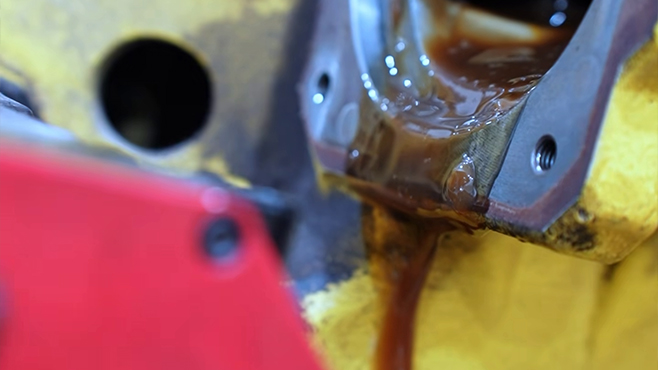
Condensate and water ingress from equipment cause the oil to emulsify. While seemingly insignificant, water-contaminated oil inflicts highly insidious damage on oil seal rubber—particularly NBR (nitrile rubber), which is extremely vulnerable to such contamination.
· Hydrolysis and degradation, complete loss of elasticity: In prolonged high-temperature environments, moisture breaks down the rubber’s polymer chains, triggering hydrolysis reactions that cause the rubber to soften, strength to plummet, and permanent deformation to increase significantly, making it impossible for the seal to maintain a tight fit against the rotating shaft.
· Vicious cycle of corrosion: Moisture causes the rotating shaft to rust; the resulting hard rust particles further exacerbate oil seal wear, while metal ions catalyze the oxidation and aging of the rubber, causing dual damage to the sealing structure.
· Oil film failure, dry friction, and heat generation: The emulsification of oil and water completely destroys the lubricating oil film. The oil seal lip loses its lubricating protection, resulting in boundary dry friction, a sharp rise in temperature, and accelerated burning and failure of the oil seal.
3. Chemical Contamination
Fuel, acidic or alkaline substances, ethylene glycol coolant, cleaning agent residues, and acidic substances produced by oil oxidation that have entered the system are all considered chemical contaminants that can directly alter the physical and chemical properties of rubber.
· Swelling or shrinkage, resulting in complete disruption of the seal fit: Chemical impurities alter the solubility of the oil, leading either to excessive swelling of the rubber—causing the lip to expand and become jammed, a sharp increase in frictional resistance, and hardening due to high-temperature scorching—or to the extraction of plasticizers from the rubber, causing it to shrink and harden, lose elasticity, widen the sealing gap, and result in persistent oil leakage.
· Oxidative corrosion, surface powdering, and stickiness: Carboxylic acids and peroxides generated by oil oxidation continuously attack the rubber’s cross-linked structure, triggering synergistic thermal-oxidative and ozone aging, which causes the oil seal’s surface to become sticky, powdery, and flaky.
· Internal blistering and delamination: Coolant and acidic or alkaline media penetrating the rubber’s interior destroy its molecular structure, causing the oil seal to bubble, delaminate, and develop micro-pores, resulting in a complete loss of sealing performance.
4. Thermal Degradation Products of Engine Oil
Prolonged operation of engine oil at high temperatures produces degradation products such as sludge, carbon deposits, and asphaltenes. While these substances do not directly wear down the oil seal, they cause continuous, chronic damage:
· Hardened carbon particles continuously cut into the rubber of the lip;
· Sludge buildup impedes heat dissipation, causing localized temperatures to rise continuously;
· Degradation products release free radicals, which continuously catalyze the aging and deterioration of the rubber.
Six Typical Signs of Oil Seal Failure Caused by Oil Contamination
During routine equipment inspections, the following issues generally indicate that oil seal damage is caused by oil contamination rather than a defect in the oil seal itself:
· Hardening and embrittlement of the lip: Plasticizers are leached out by the oil, compounded by oxidation and aging, causing the rubber to lose its flexibility and making it highly prone to cracking in low-temperature environments;
· Abnormal rubber deformation: In the absence of external damage, the oil seal inexplicably swells and seizes or shrinks and leaks oil;
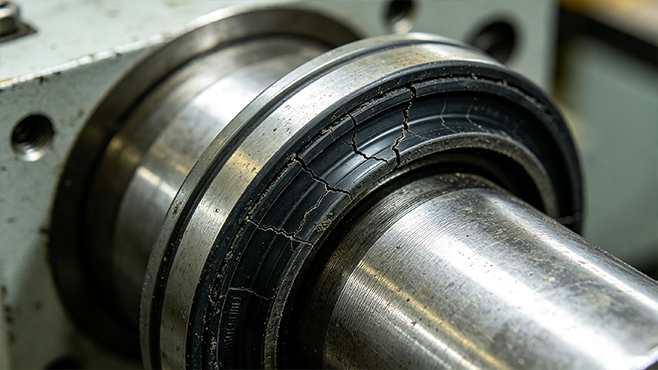
· Surface cracking and radial cracks: Fine cracks appear on the lip and gradually spread into the rubber matrix;
· Lip tearing and plow-mark notches: Physical damage caused by long-term abrasion from solid particles;
· Rubber blistering, delamination, and peeling: Structural damage caused by moisture and chemical agents penetrating the interior;
· Permanent plastic deformation: After equipment shutdown, the oil seal lip fails to rebound and reseal against the rotating shaft, resulting in continuous static leakage.
A Deadly Vicious Cycle
The most dangerous aspect of oil contamination is not a single instance of damage, but rather an irreversible, closed-loop vicious cycle that continuously accelerates the failure of the sealing system:
Oil contamination → Breakdown of the lubricating film, friction-induced heating → Accelerated oxidation and acidification of the oil → Increase in corrosive and abrasive impurities → Simultaneous acceleration of rubber wear, aging, and swelling → Decline in the oil seal’s sealing performance → Oil leakage, water ingress, and further penetration of contaminants → Rapid failure of the oil seal
Extensive empirical data shows that qualified oil seals of the same model and material will have their service life shortened by 50%–80% when exposed to contaminated oil. Many oil seals that appear to have a “short lifespan” are, in essence, victims of oil contamination.
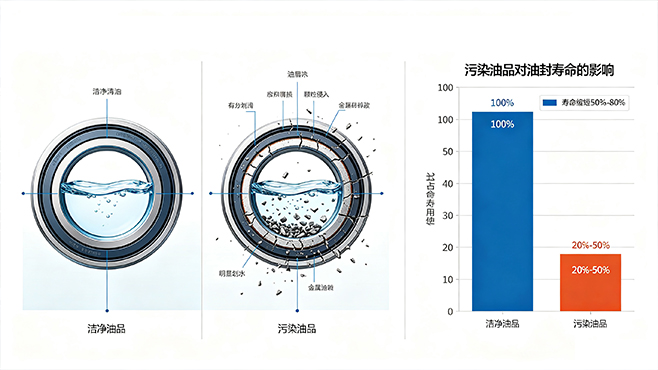
Different rubber materials exhibit vastly different levels of resistance when exposed to contaminated oil. Selecting the correct sealing material based on the operating conditions can significantly improve adaptability to various complex operating environments, reduce failure issues such as aging, swelling, and cracking of oil seals and O-rings at the source, and extend the service life of components.
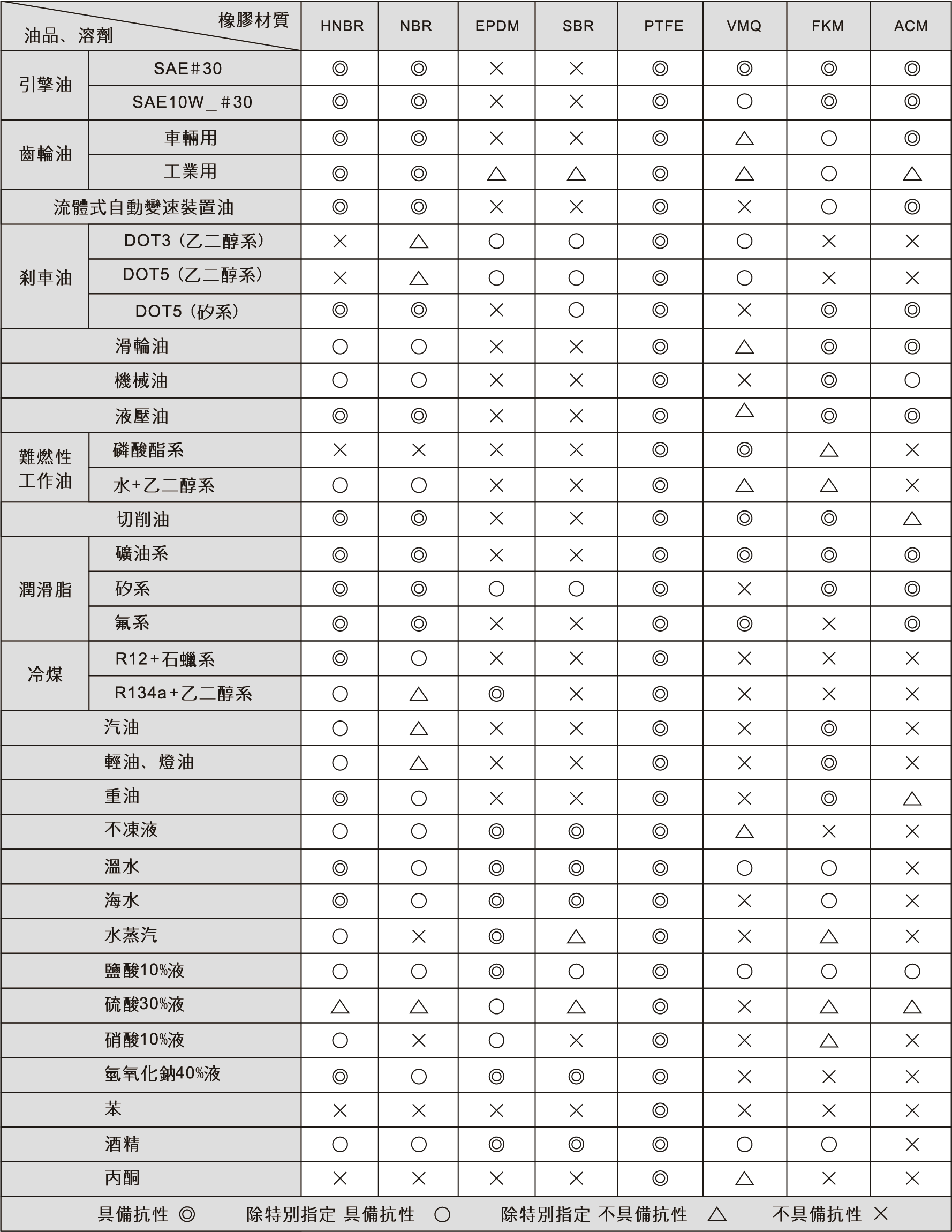
Table 1: Stability of Various Oils and Chemical Solutions
The oil serves as the “environment” in which the rubber seals operate. Only in a clean and stable environment can oil seals provide long-lasting durability; if the environment is contaminated or degraded, even the highest-quality oil seals will age rapidly and become unusable. Effective control of oil cleanliness and the selection of seal materials optimized for specific operating conditions are essential for reducing seal failures and lowering equipment operation and maintenance costs.